

Choosing a sunscreen often comes down to one key question: chemical or mineral?
Both types protect your skin from harmful ultraviolet (UV) radiation, but they work differently and feel different on the skin. Understanding these differences can help you choose a sunscreen you’ll actually use every day.
This guide explains how each type works, their advantages and limitations, and how to decide which one fits your skin and lifestyle best.
How Sunscreens Protect Your Skin
Sunscreens are designed to protect against UVA and UVB radiation:
- UVA rays penetrate deeper into the skin and contribute to premature aging and long-term skin damage.
- UVB rays affect the surface of the skin and are the main cause of sunburn.
According to the American Academy of Dermatology, broad-spectrum sunscreens protect against both types of UV rays and are recommended for daily use.
Source: American Academy of Dermatology – Sunscreen FAQs
https://www.aad.org/media/stats-sunscreen (accessed 2025)
What Is Chemical Sunscreen?
Chemical sunscreens use organic (carbon-based) UV filters that absorb UV radiation and convert it into heat, which is then released from the skin.
Common characteristics:
- Lightweight textures (gel, essence, serum)
- No white cast
- Often preferred for daily wear and under makeup
Common chemical UV filters include:
- Ethylhexyl Triazone
- Diethylamino Hydroxybenzoyl Hexyl Benzoate
- Bis-Ethylhexyloxyphenol Methoxyphenyl Triazine
These filters are widely used and approved in many regions, including the EU and South Korea.
Source: European Commission – CosIng Database
https://ec.europa.eu/growth/tools-databases/cosing/
Who may prefer chemical sunscreen?
- People who want a bare-skin feel
- Those who dislike heavier textures
- People who wear sunscreen daily under makeup
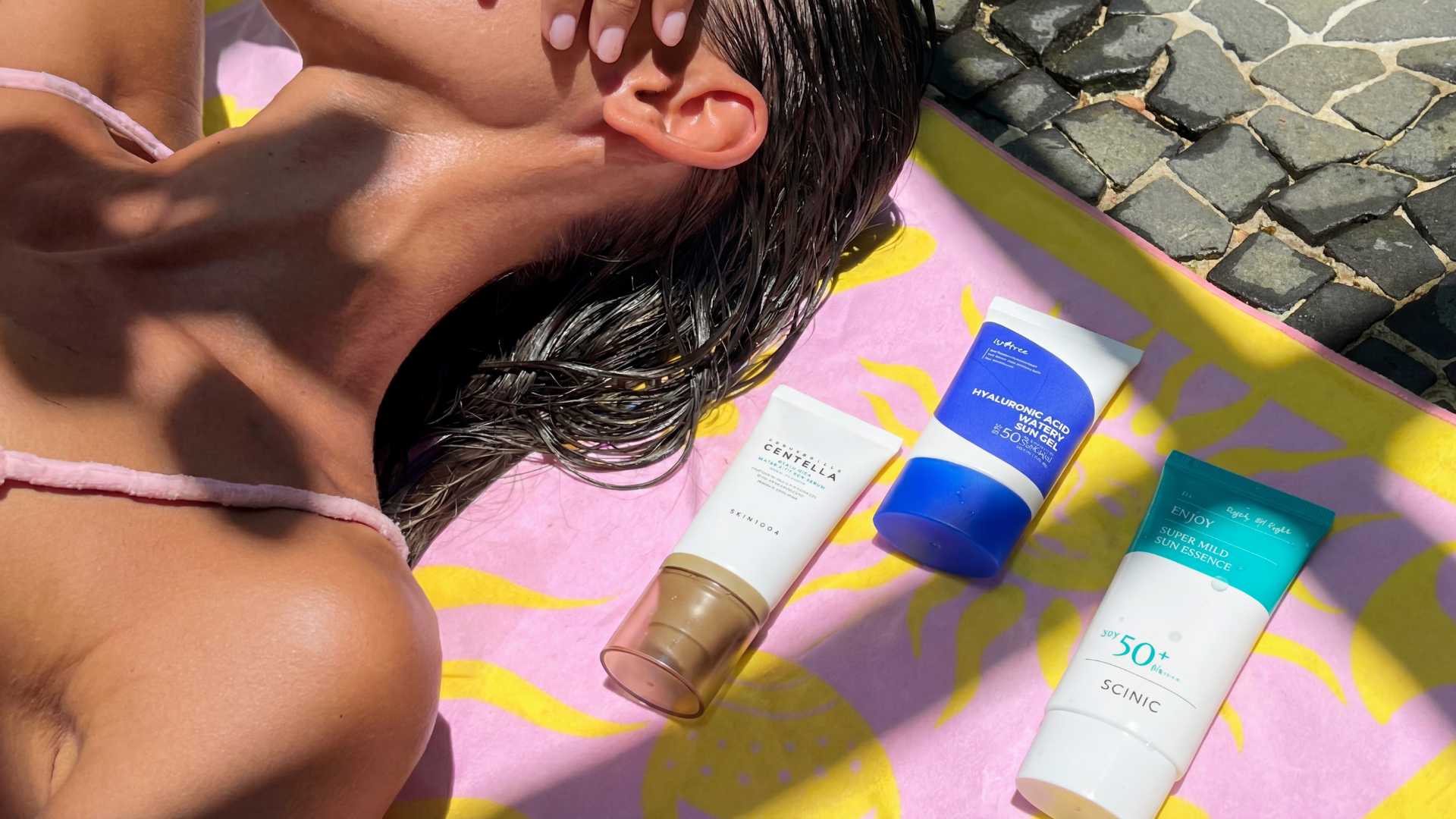
Products such as Isntree Hyaluronic Acid Watery Sun Gel, SCINIC Enjoy Super Mild Sun Essence, and SKIN1004 Madagascar Centella Hyalu-Cica Water-Fit Sun Serum fall into this category due to their lightweight textures and chemical UV filters.
What Is Mineral Sunscreen?
Mineral sunscreens (also called physical sunscreens) use inorganic UV filters that sit on the skin’s surface and reflect or scatter UV radiation.
Approved mineral UV filters:
- Zinc oxide
- Titanium dioxide
- These ingredients are recognized by dermatology organizations as effective UV blockers.
Source: U.S. Food & Drug Administration – Sunscreen Ingredients
https://www.fda.gov/drugs/over-counter-otc-drug-monograph-process/sunscreen-ingredients
Common characteristics:
- Gentle on sensitive skin
- Often recommended for reactive or post-procedure skin
- May leave a slight white cast, depending on formulation
Who may prefer mineral sunscreen?
- People with sensitive or easily irritated skin
- Those who prefer zinc-based protection
- Individuals who want minimal skin absorption
A product such as haruharu wonder Black Rice Pure Mineral Relief Daily Sunscreen is an example of a mineral sunscreen formulated with zinc oxide and designed for sensitive skin.
Is One Type Safer Than the Other?
Dermatology organizations consistently state that both chemical and mineral sunscreens are safe and effective when used as directed.
The American Academy of Dermatology confirms that:
- Approved sunscreen ingredients do not pose known health risks when used properly
- The risk of UV damage far outweighs concerns about sunscreen ingredients
Source: American Academy of Dermatology – Sunscreen Safety
https://www.aad.org/public/everyday-care/sun-protection/sunscreen-patients/sunscreen-safety
Which One Is Better for Sensitive Skin?
Sensitivity is individual, but trends observed in dermatology suggest:
- Mineral sunscreens are often better tolerated by people with rosacea, eczema, or post-treatment skin
- Chemical sunscreens may work well for others, especially when formulated without fragrance or alcohol
Choosing a sunscreen that feels comfortable on your skin increases the likelihood of consistent daily use, which is the most important factor for effective sun protection.
There Is No “Best” Sunscreen — Only the One You’ll Use
From a medical perspective, the most effective sunscreen is the one that:
- you apply daily,
- use in sufficient amounts,
- and reapply when needed.
According to the Skin Cancer Foundation, proper sunscreen use plays a significant role in reducing UV-related skin damage and supporting long-term skin health.
Source: Skin Cancer Foundation – Sunscreen Use Guidelines
https://www.skincancer.org/skin-cancer-prevention/sun-protection/sunscreen/
Not Sure Which Type Suits Your Skin?
If you’re uncertain whether chemical or mineral sunscreen is right for you, understanding your skin type can help guide the choice. Tools such as AI-based skin analysis can provide general insights into visible skin characteristics and help narrow down suitable options.
This type of analysis is informational only and does not replace professional medical advice, but it can be a helpful starting point when choosing everyday sun protection.
Key Takeaway
Both chemical and mineral sunscreens:
protect against harmful UV radiation,
are considered safe when approved and used correctly,
and play an important role in daily skin care.
The right choice depends on your skin, your comfort, and your routine — not on fear or trends.
Sources
- American Academy of Dermatology – Sunscreen Facts & Safety
https://www.aad.org/media/stats-sunscreen
https://www.aad.org/public/everyday-care/sun-protection/sunscreen-patients/sunscreen-safety - Skin Cancer Foundation – Sunscreen Guidelines
https://www.skincancer.org/skin-cancer-prevention/sun-protection/sunscreen/ - U.S. Food & Drug Administration – Sunscreen Ingredients
https://www.fda.gov/drugs/over-counter-otc-drug-monograph-process/sunscreen-ingredients - European Commission – CosIng Cosmetic Ingredients Database
https://ec.europa.eu/growth/tools-databases/cosing/
Share:
Why Daily Sunscreen Is More Important Than You Think
How to Choose the Right Sunscreen for Your Skin Type